


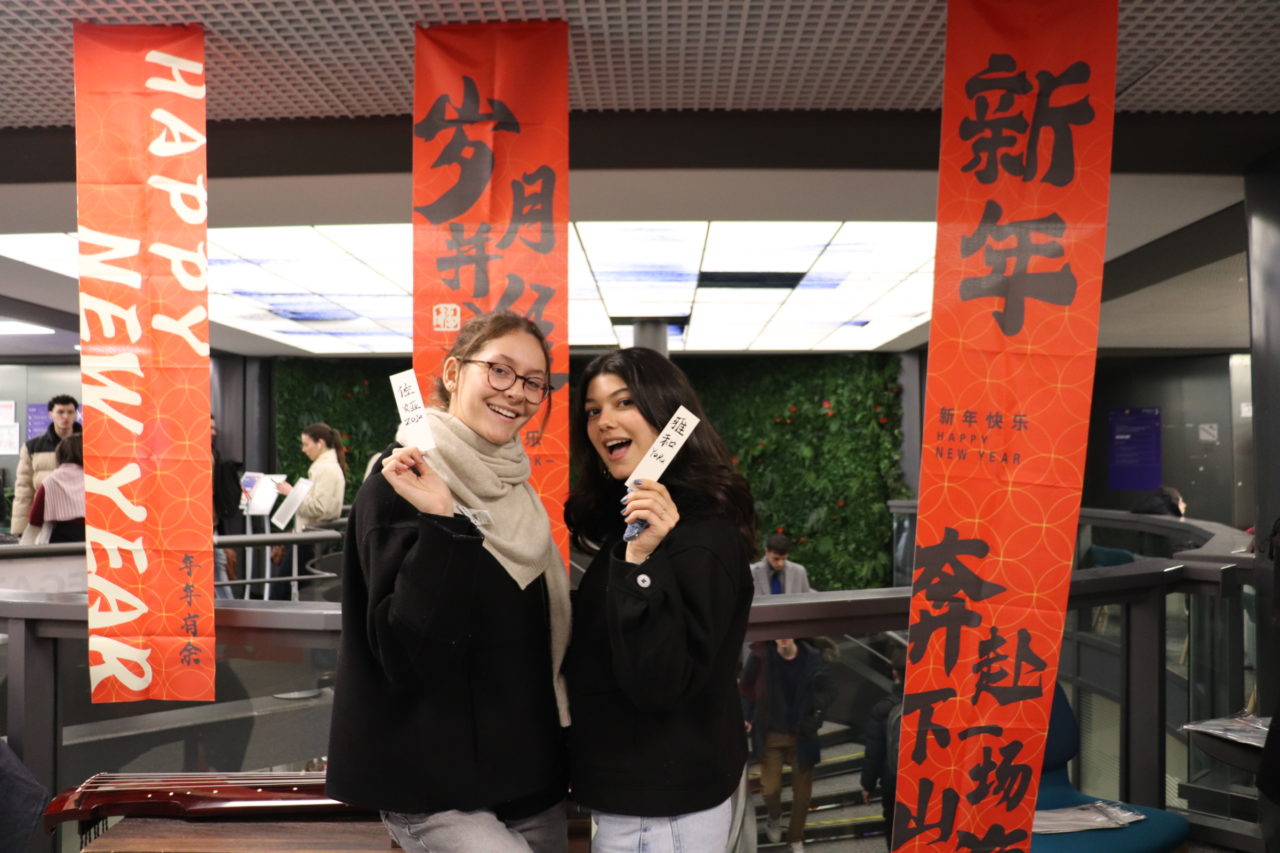
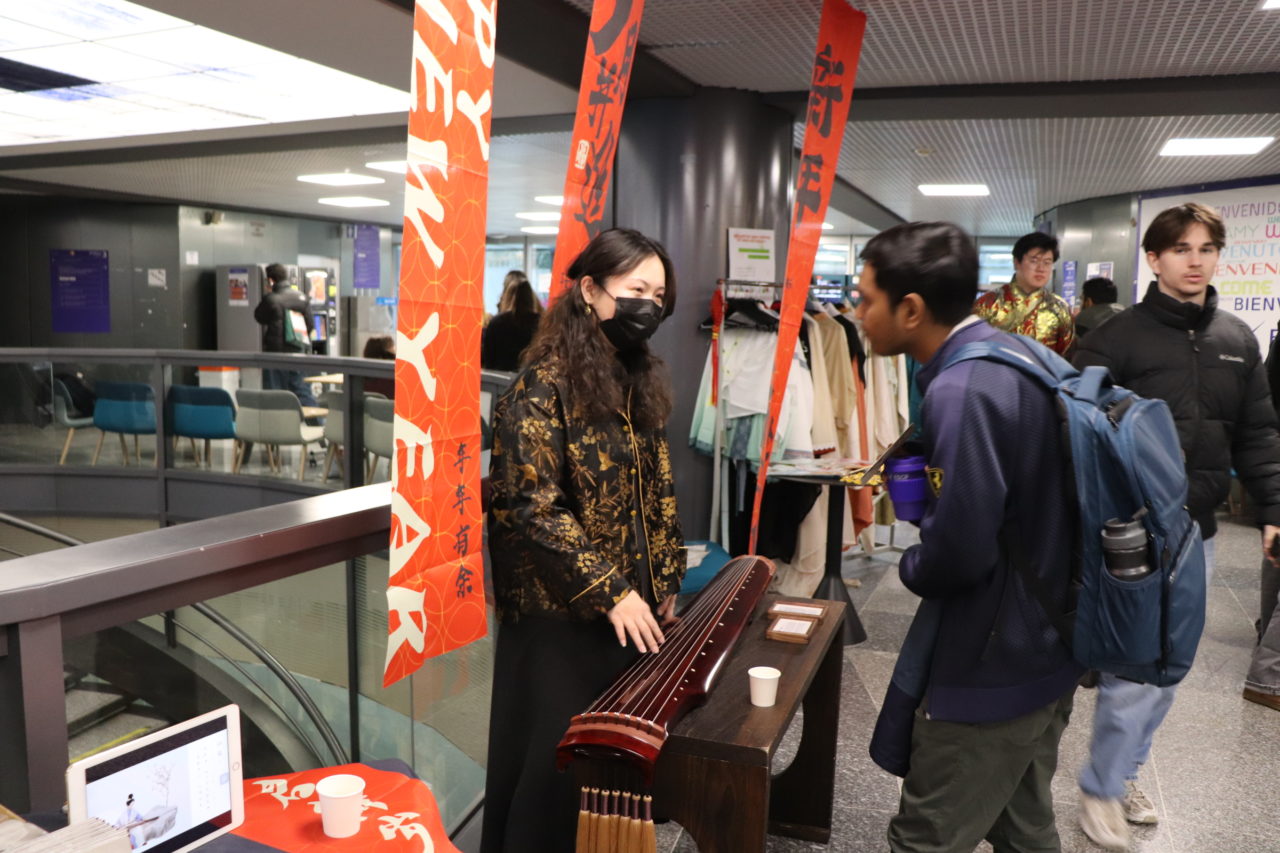
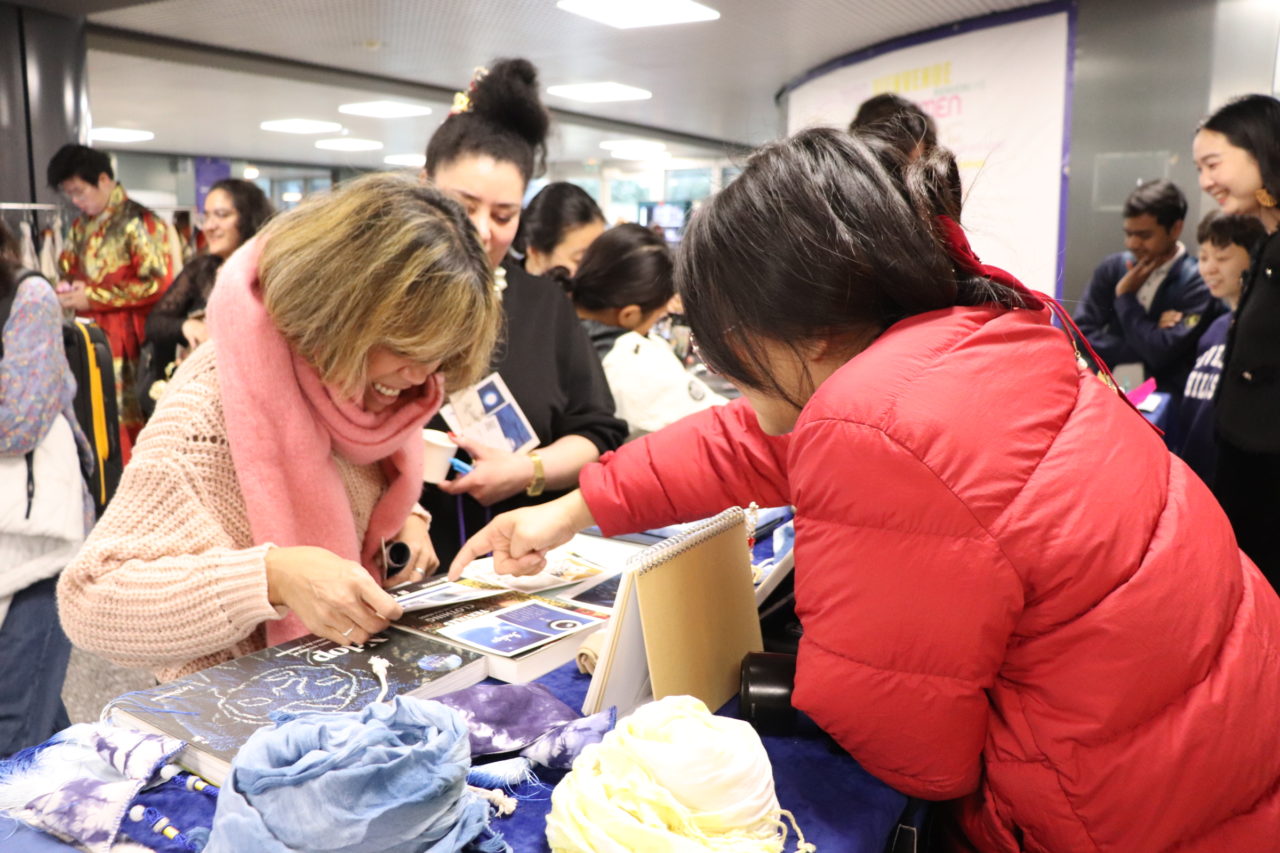
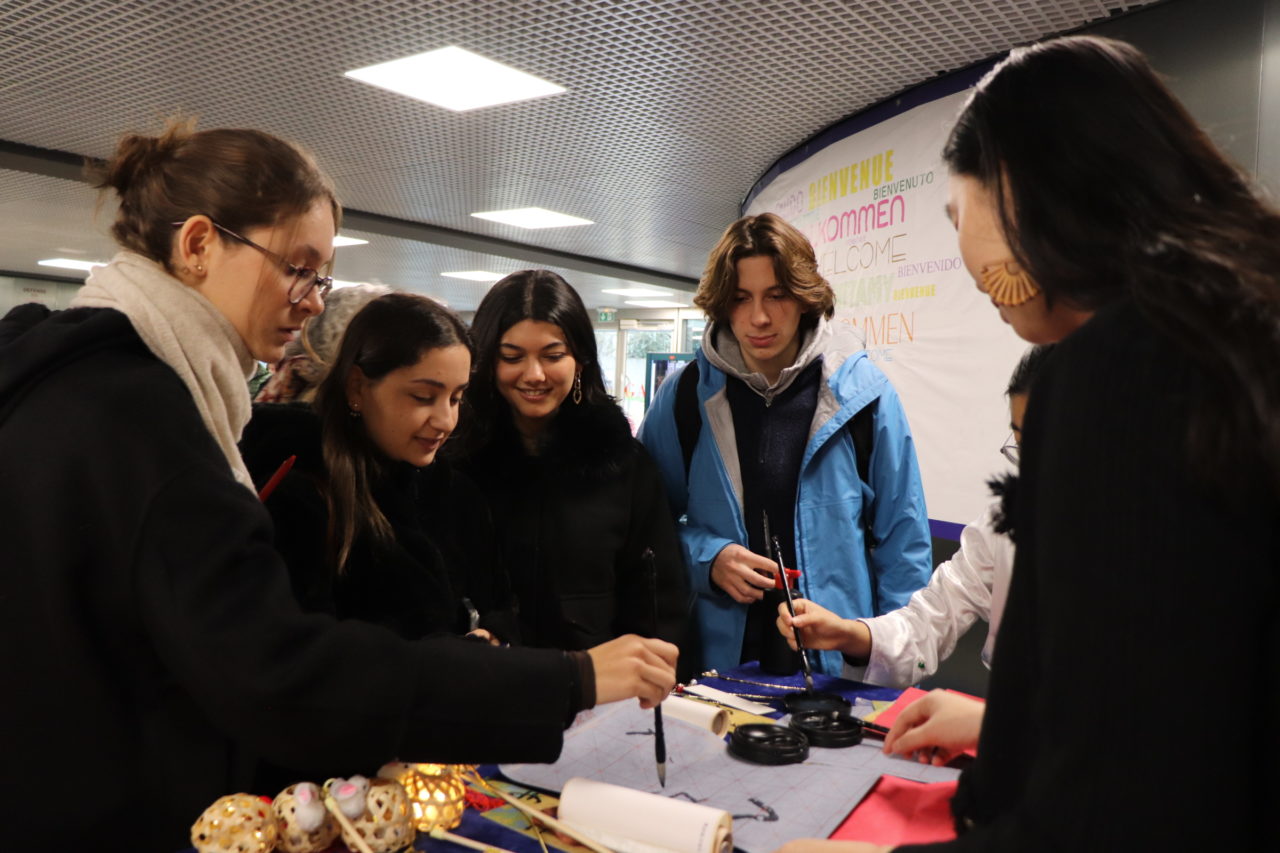
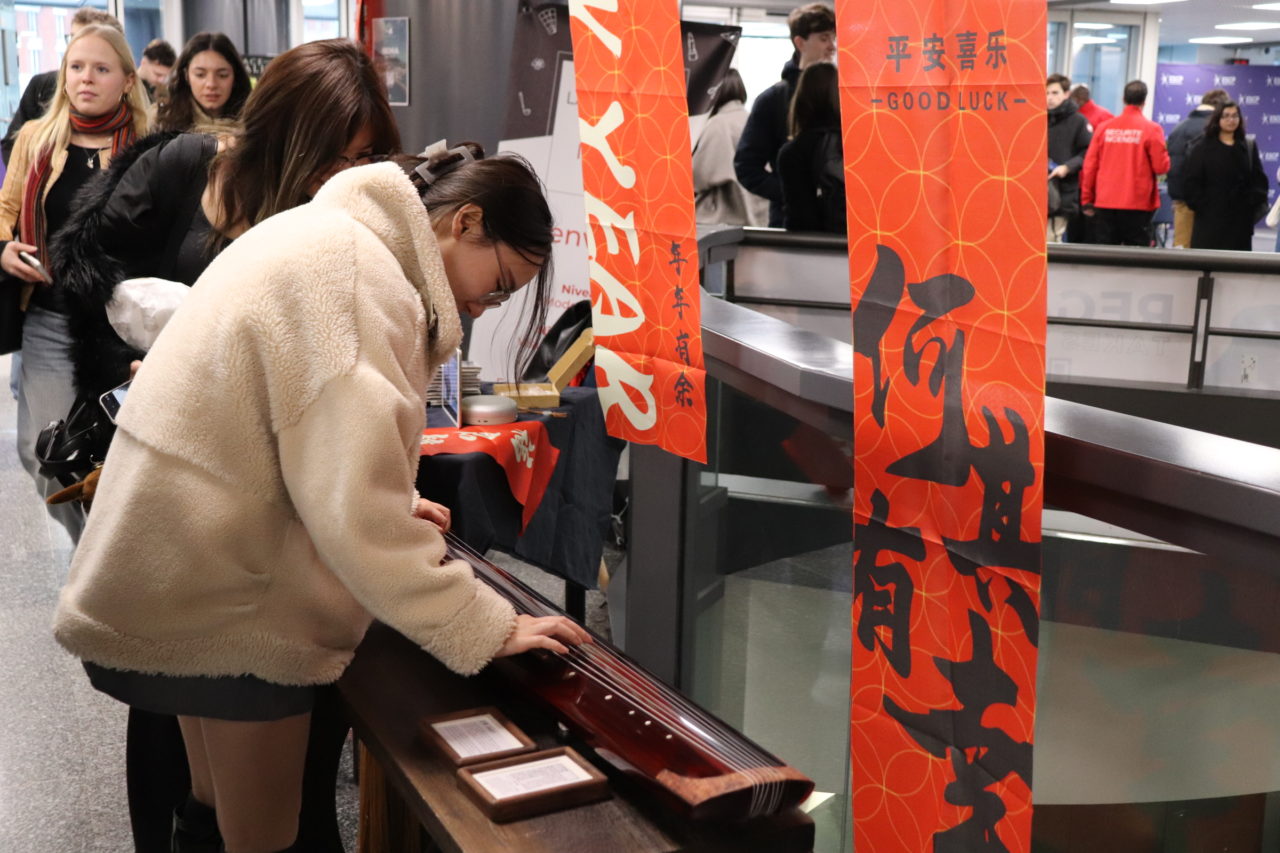
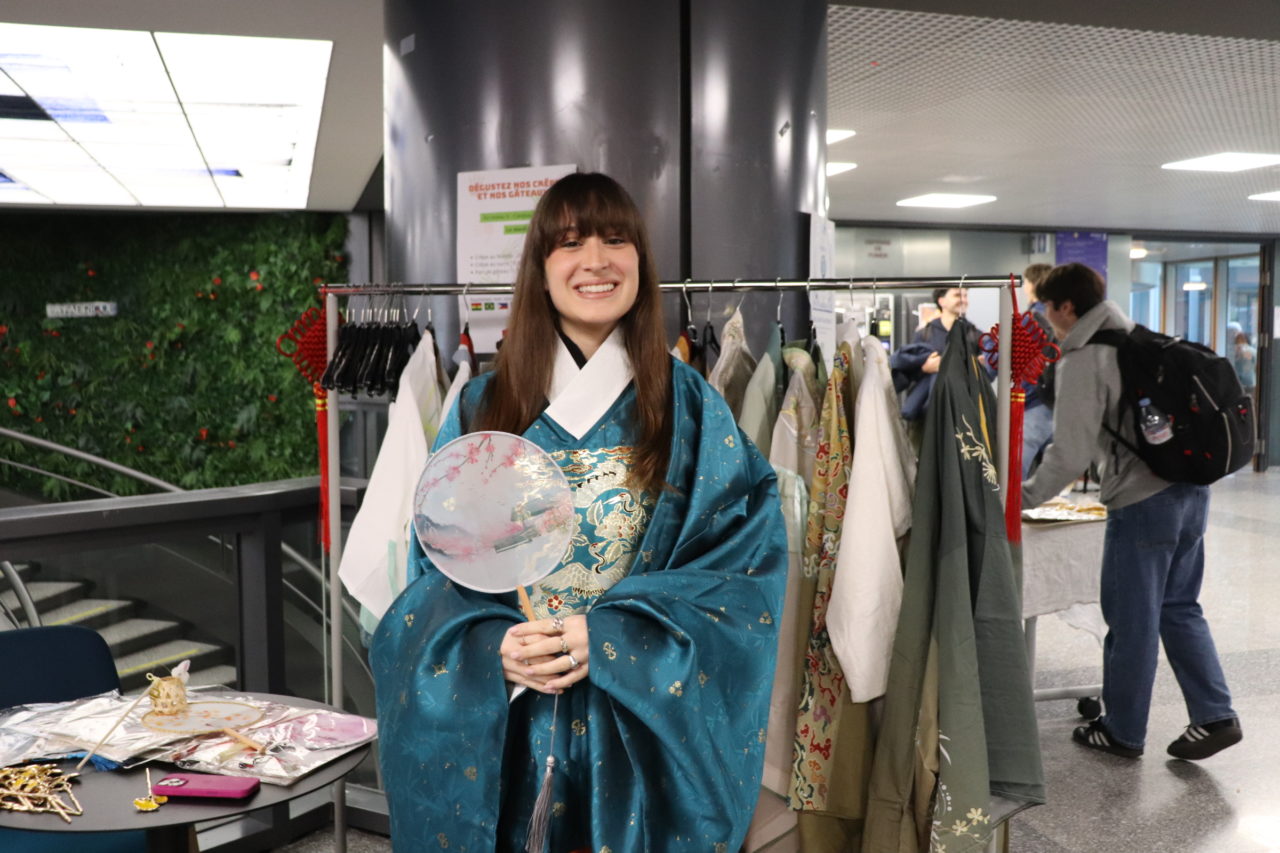
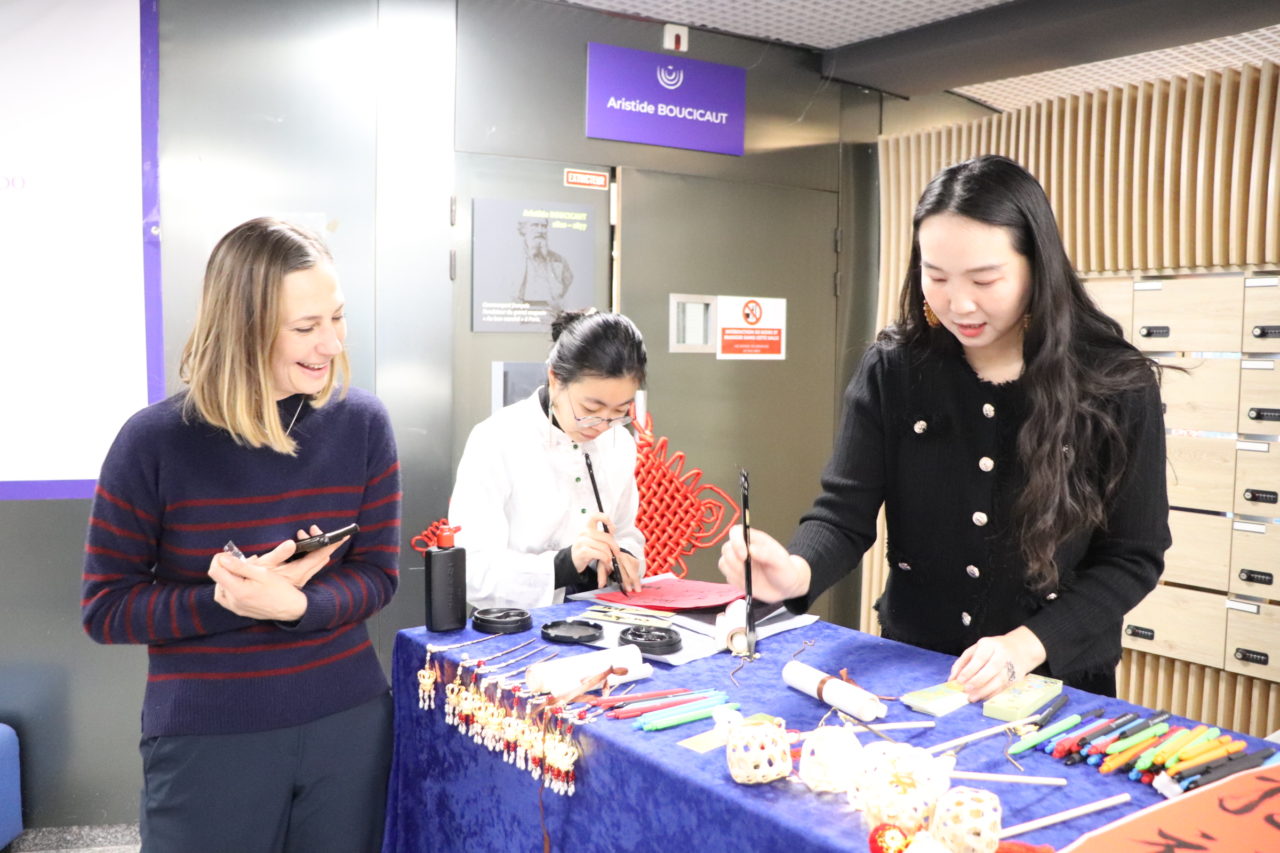
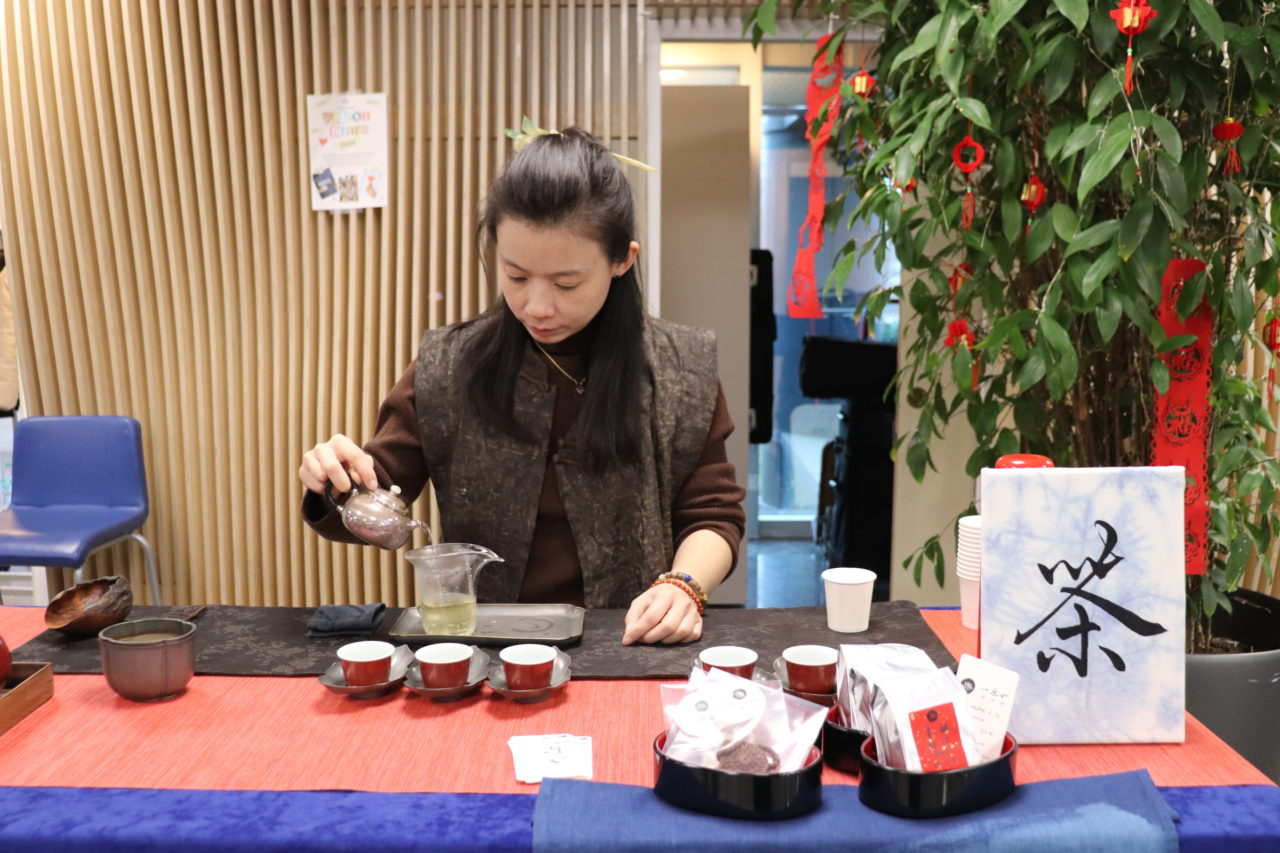
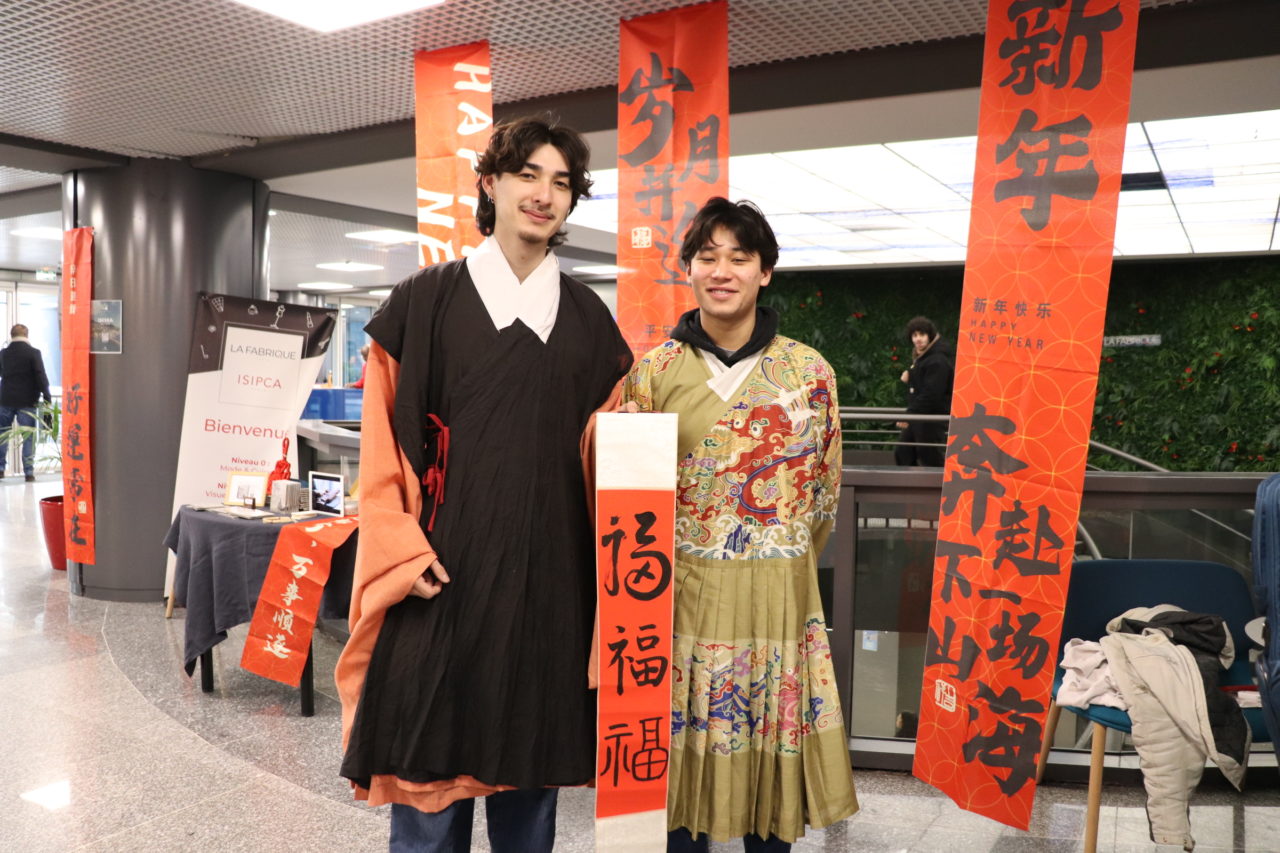
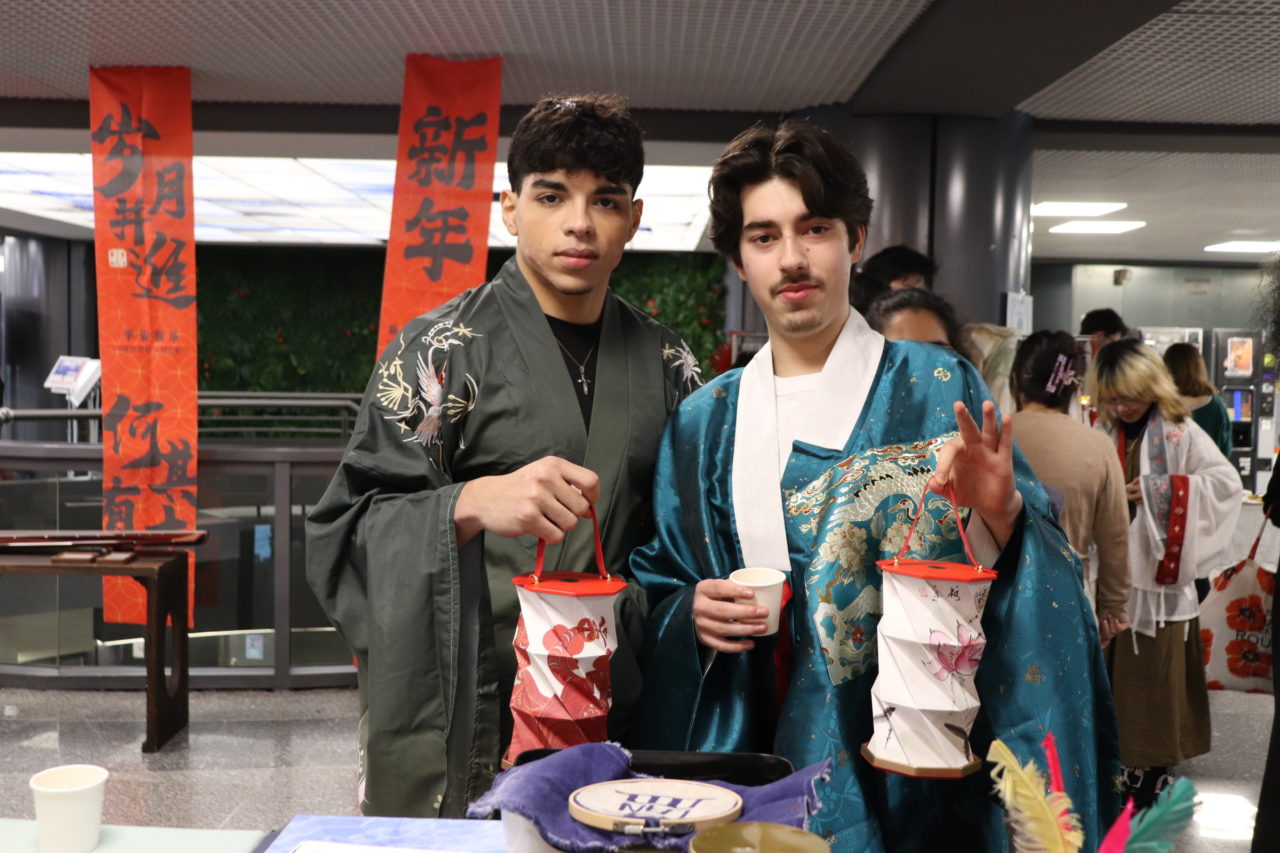
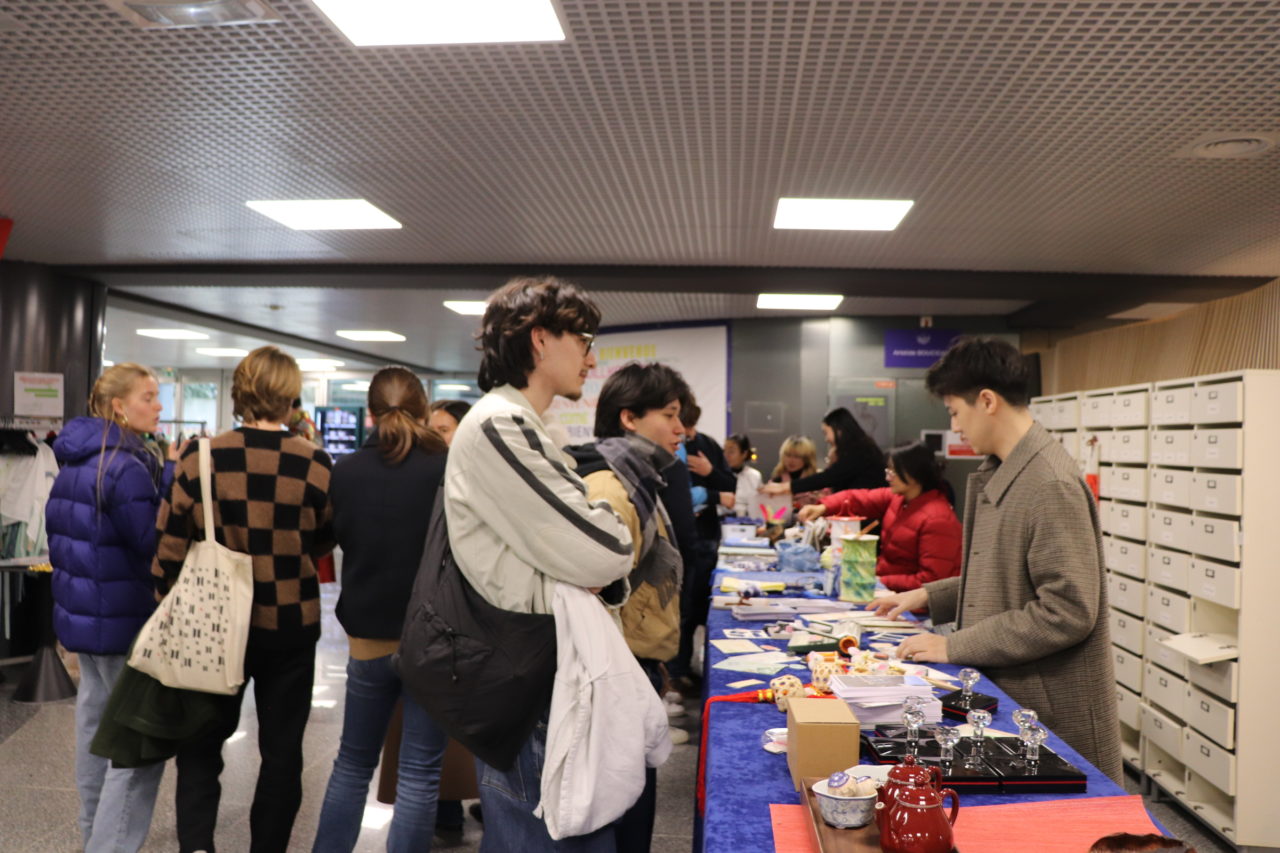
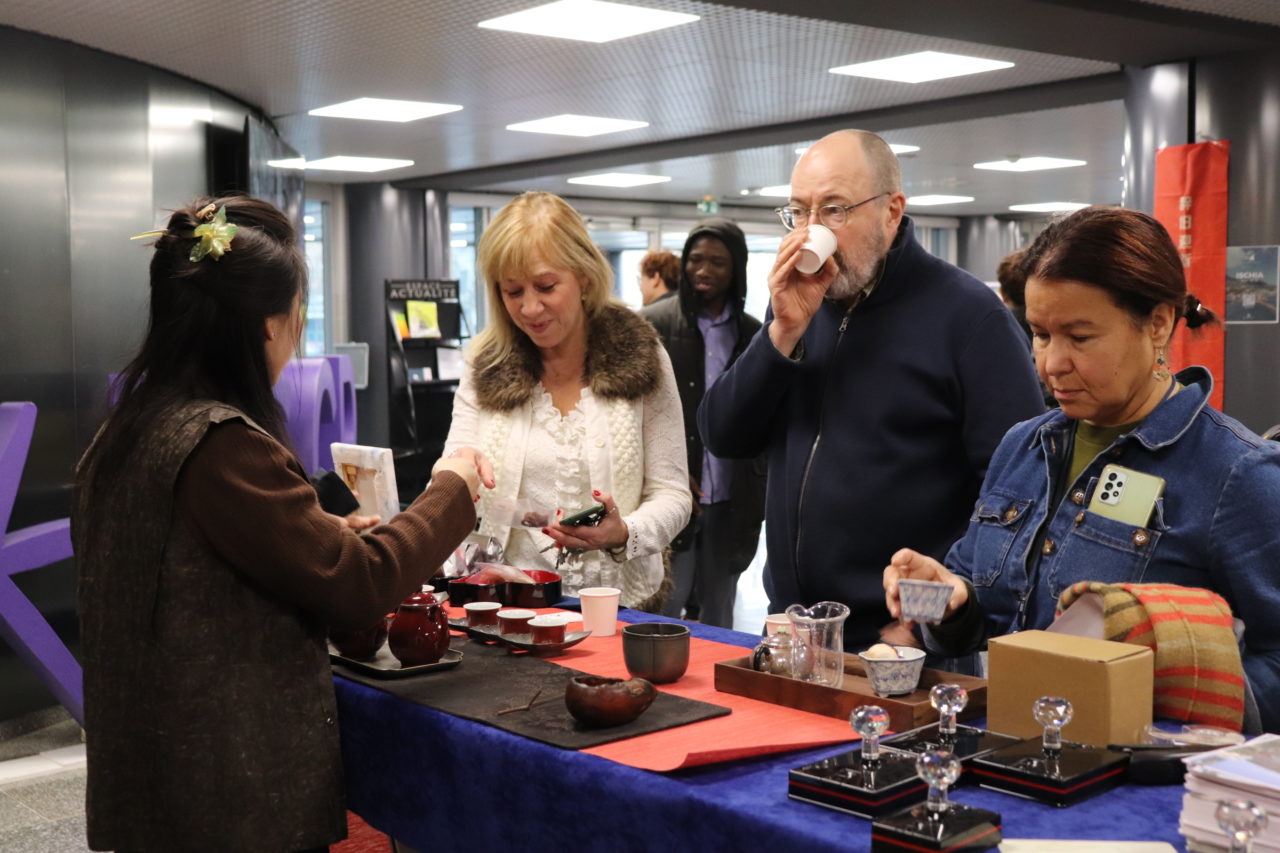
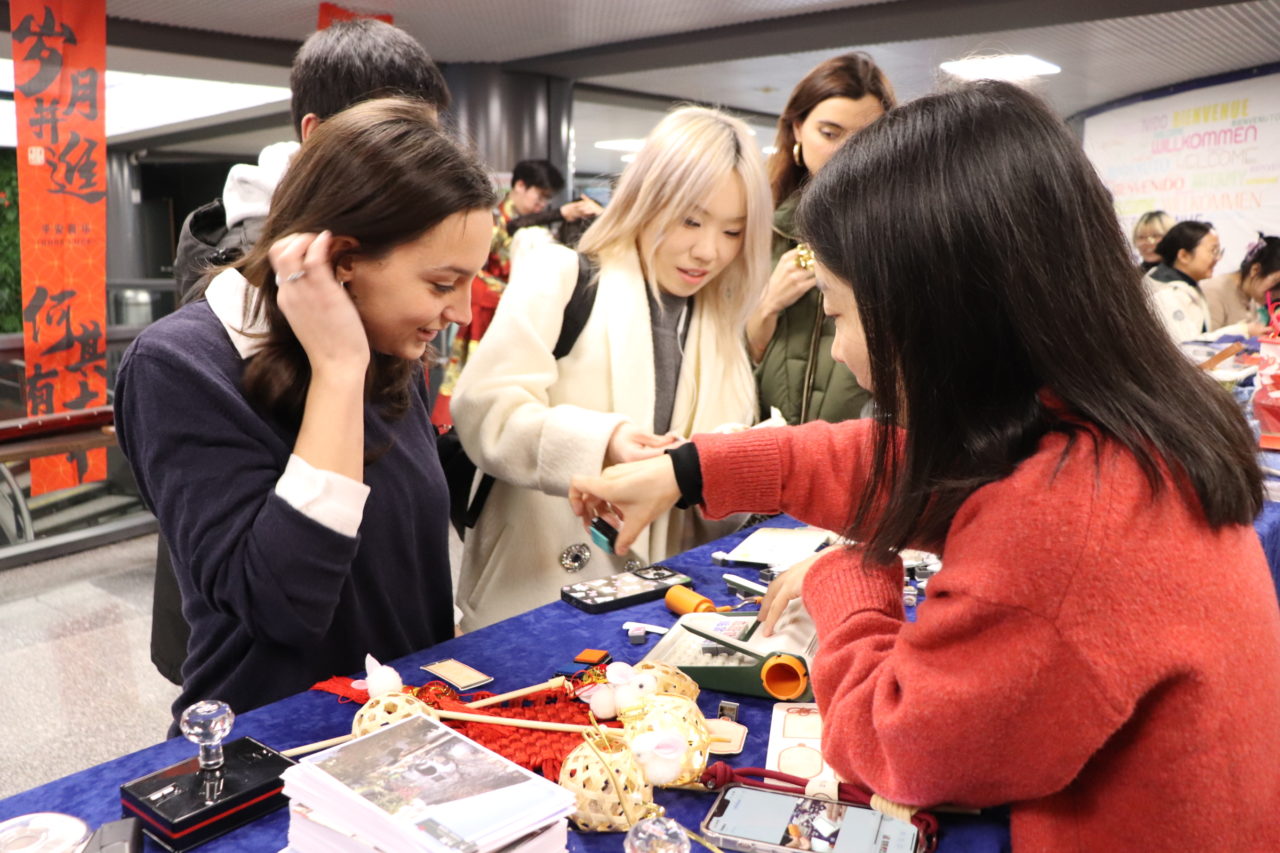
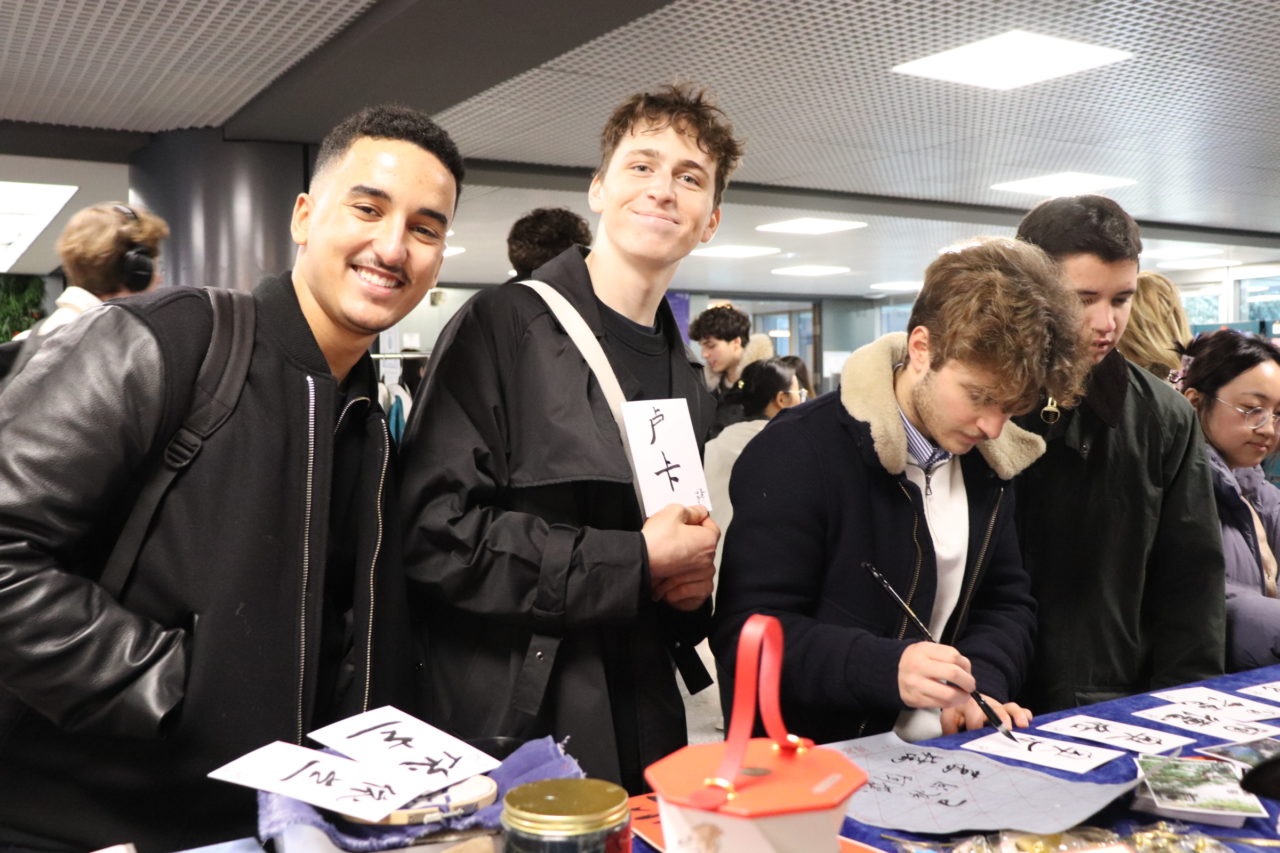
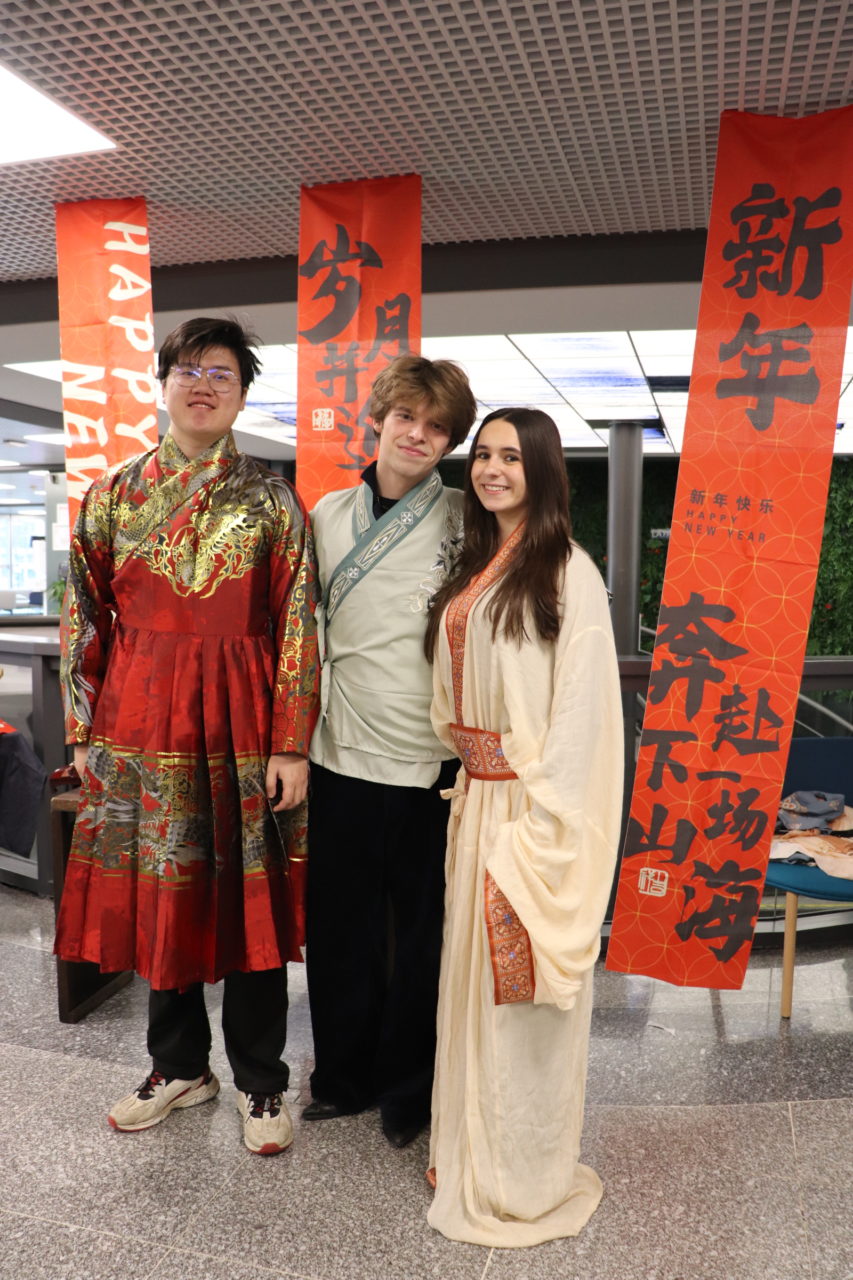
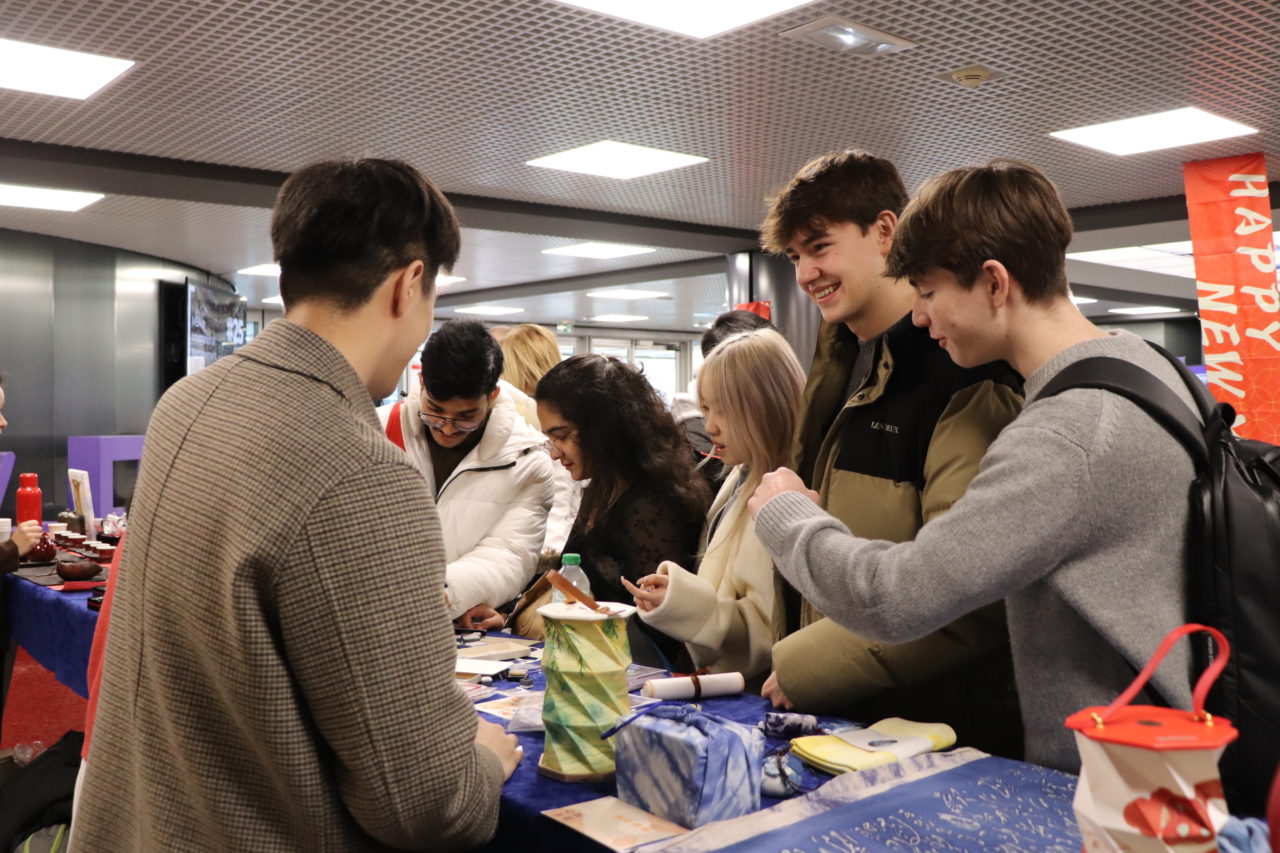
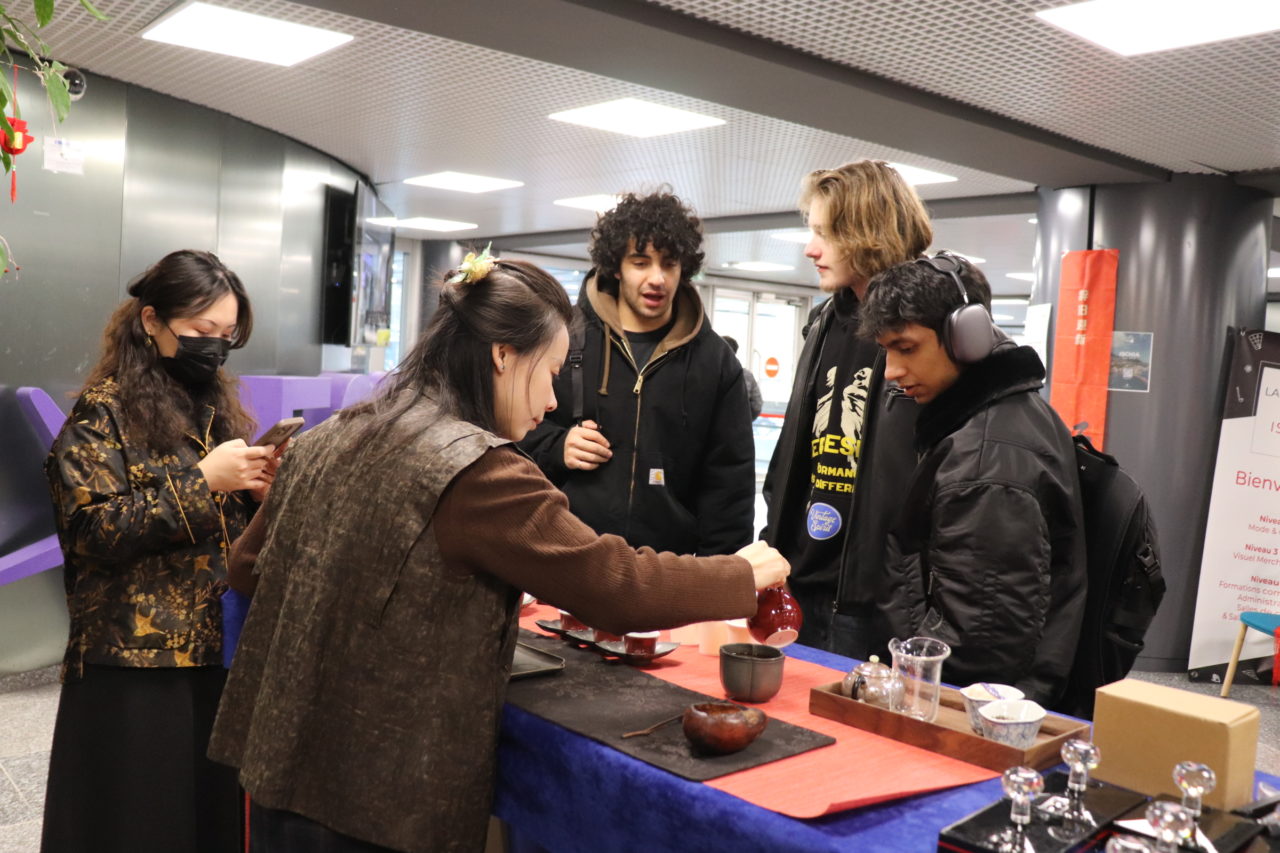
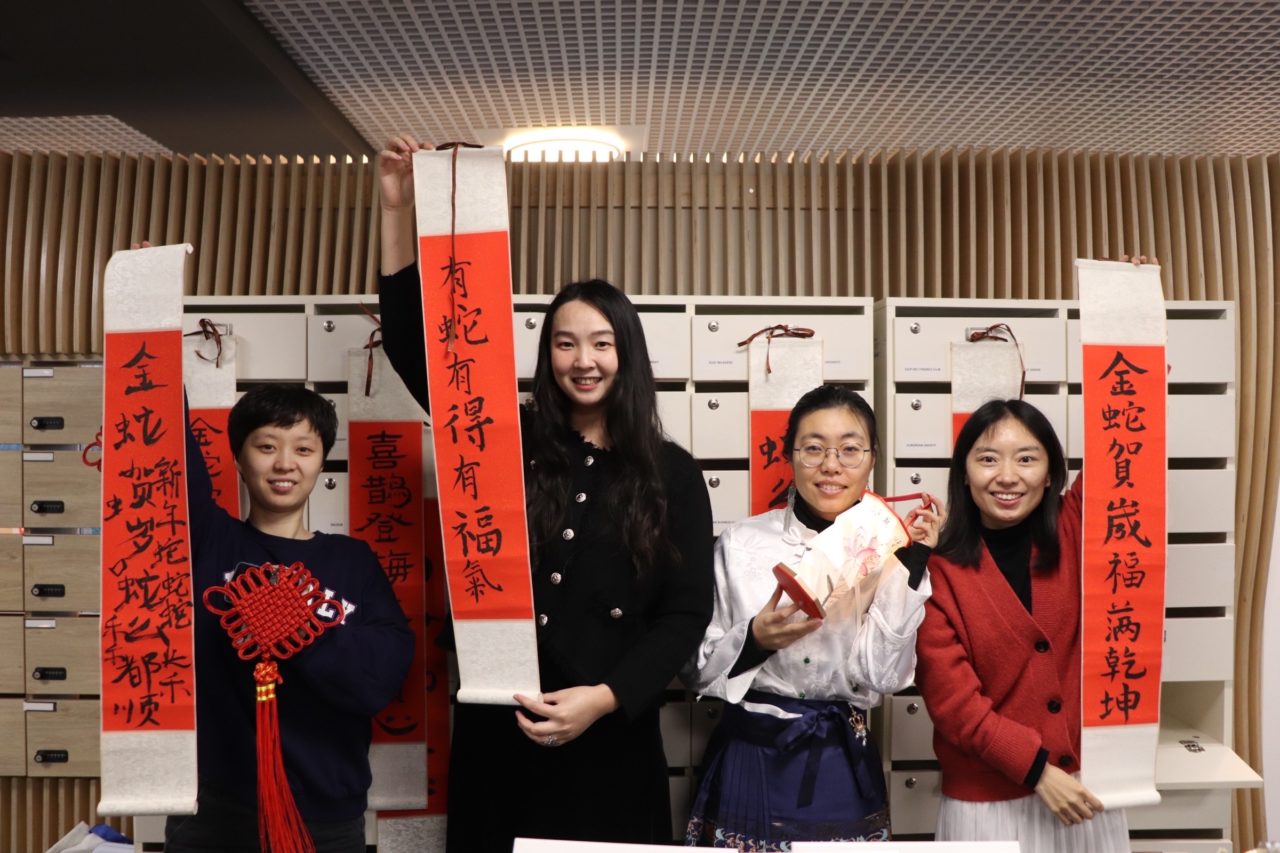
On February 5th, ESCP Confucius Institute held a “Spring Festival Bazaar” at ESCP Paris Campus, which attracted more than 300 students and teachers to experience. The “Spring Festival Bazaar” featured a number of stalls: guqin performance, handwritten Chinese New Year couplets, movable character printing, Chinese calligraphy experience, plant blue dyeing experience, Chinese tea tasting, and trying on classical Chinese costumes, and each stall was crowded with curious students and teachers.
Indigo, a color between blue and purple, and is one of the earliest natural dyes used by humans. As early as 300 BC, China had used the Polygonum tinctorium plant to extract indigo dye. The roots of indigo have been used as traditional Chinese medicine to treat infectious diseases such as colds for thousands of years.Indigo dyeing is a hand-dying technique used in many countries around the world, such as India, Indonesia, Japan, China, Europe, and many countries in Africa. In China, there are four main traditional indigo dyeing techniques, namely Bai Ethnic tie-dyeing in Yunnan and Sichuan, Miao Ethnic batik in Guizhou, Sichuan, Hunan, and other regions, as well as JIA XIE 夹缬 in Zhejiang and printing dyeing in Jiangsu and Hunan.
The Spring Festival Celebration is one of the highlights of the ESCP Confucius Institute which organizes a large-scale Spring Festival Celebration every year on the main campus of ESCP. Based on the teaching of Chinese language, the ESCP Confucius Institute is committed to promoting mutual understanding between Chinese and French people, and to promoting cultural exchanges between the two countries, through the implementation of Chinese-French student exchange programs and special cultural activities. EBCI is committed to promoting mutual understanding between Chinese and French youth and promoting cultural exchanges between China and France.
 Google 日历